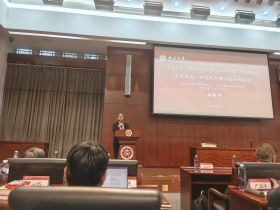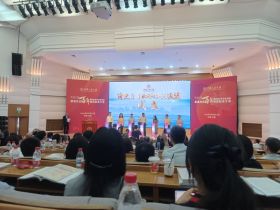


On November 23, I attended the Second Zhejiang University West Lake Forum in Hangzhou. Overall, the quality of this year's papers declined compared to last year. By discipline, historical research demonstrated higher standards than philosophical studies. For master's and even doctoral candidates, the demands in philosophy, theology, and literary studies are increasingly stringent. First comes language proficiency, followed by logical rigor, and then intellectual depth. If scholars cannot read primary sources and instead rely partially or entirely on secondary literature, the value of their work is significantly diminished. When secondary sources are used without logical rigor—where ideas lack clarity, language becomes overly literary, and terminology is ambiguous—the result is incoherent, obscure, or even nonsensical writing that offers little academic benefit. Similarly, papers that merely summarize others' ideas or research without presenting original thought or critical inquiry hold limited value. In contrast, historical research—grounded in mastery of sources—may prove more compelling. It might reveal little-known historical periods, elucidate academically significant themes, interpret historical controversies, or describe pivotal events. While the threshold for historical research is lower, excellence remains challenging. It demands proficiency in language, materials, logic, and thought—effectively integrating principle, textual investigation, and literary composition.
Attend the Zhejiang University conference
Continue