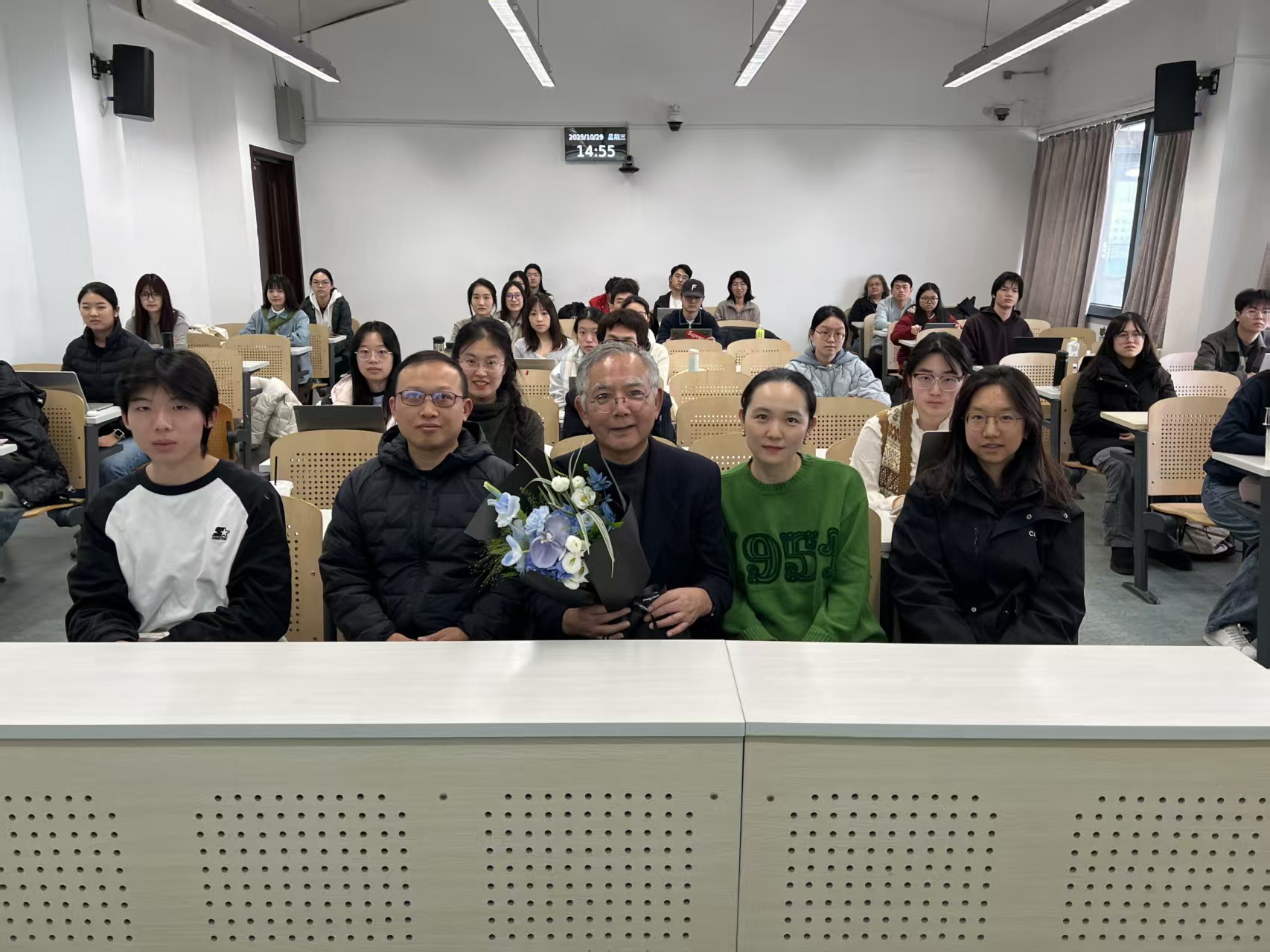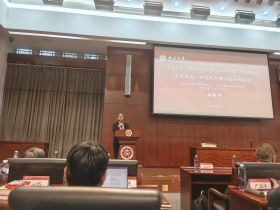

This afternoon in Room 509 of Building 2, I searched for quite a while before finding it. By the time I entered the classroom, the lecture was almost starting.
Professor Keiichi Uchida is an emeritus professor at Kansai University in Japan and maintains connections with numerous universities in China.
The lecture began with an introduction to “Cultural Exchange Studies,” emphasizing its transnational and interdisciplinary nature. It then traced the transnational journey of the Virgin and Child image—from Spain to Manila, then to Nagasaki, and finally to Beijing.
Professor Uchida noted a discrepancy between the copperplate engraving of the Virgin Mary discovered in Nagasaki, Japan, and the depiction in Cheng Shizhi's Ink Garden. Specifically, the infant Jesus in the engraving lacks the dove that appears in the latter. It's possible the dove was originally present but later removed, reportedly due to Japan's ban on Christianity in 1597.
Professor Uchida explored the relationship between Matteo Ricci and iconographic missionary work, focusing particularly on the origins of the Cheng's Ink Garden and the two paintings Ricci presented to Emperor Shenzong. Naturally, some questions remain unresolved.
Moderator Professor Dong Lihui has conducted in-depth research on image translation during the 17th and 18th centuries.